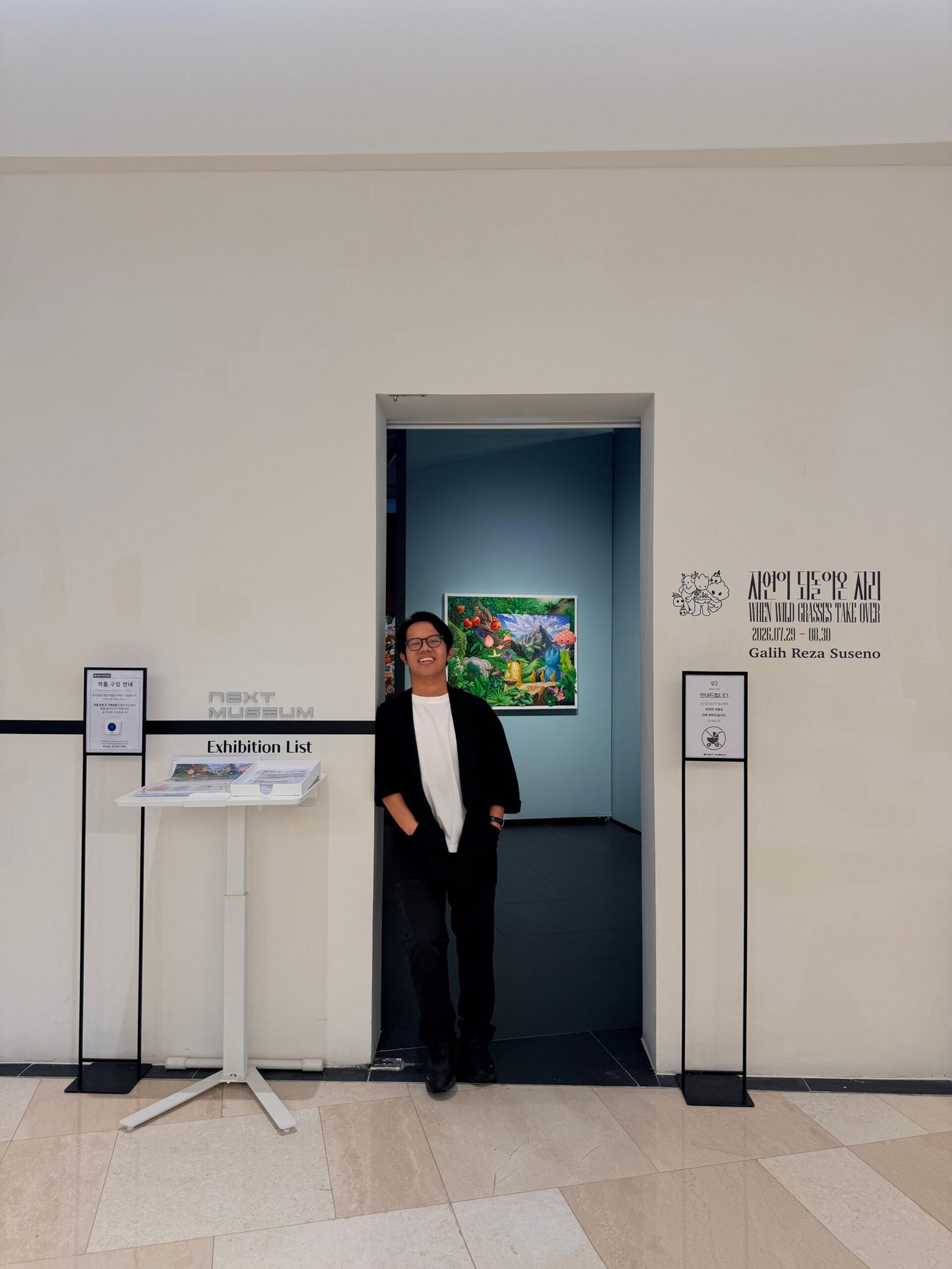
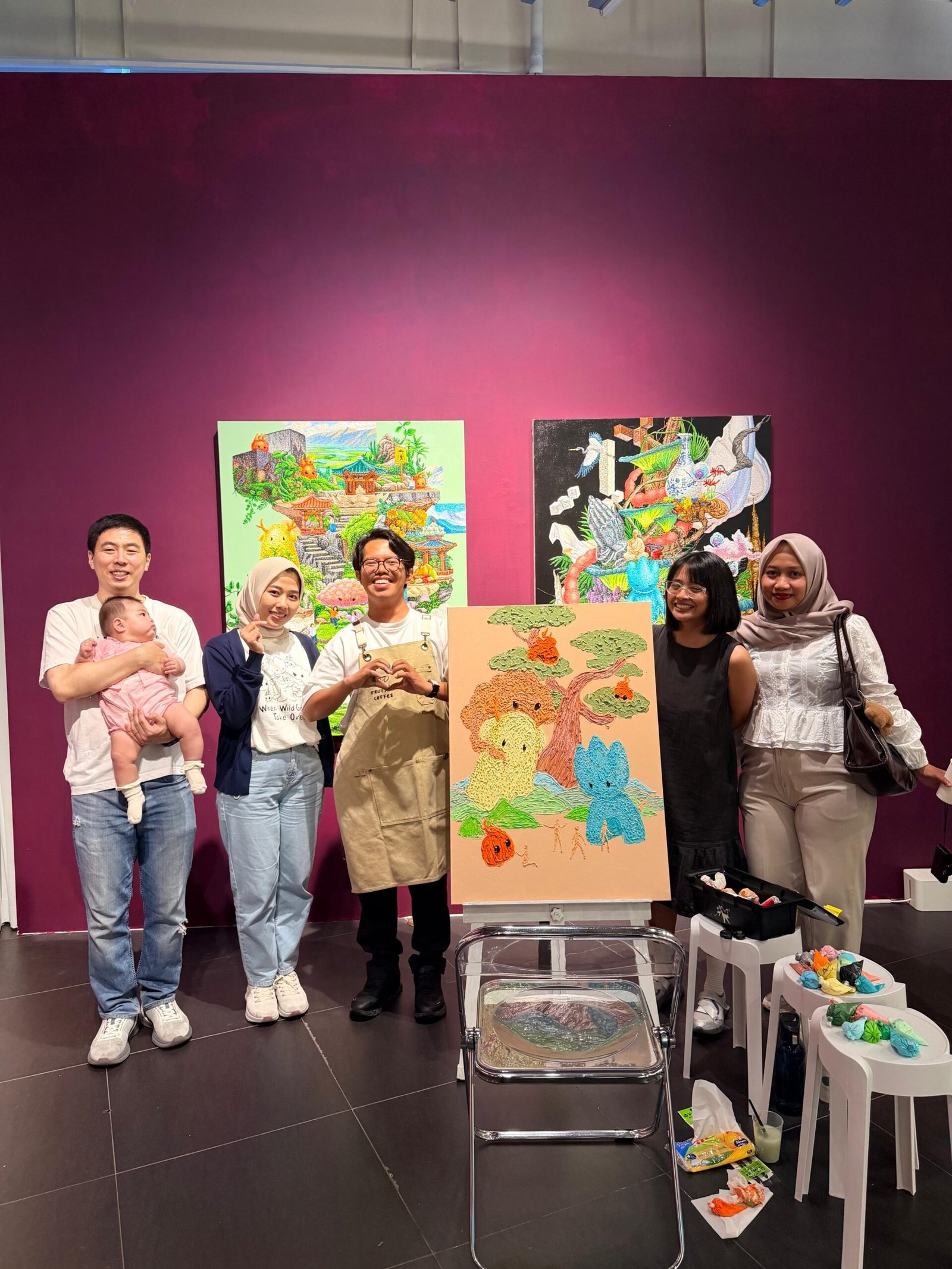
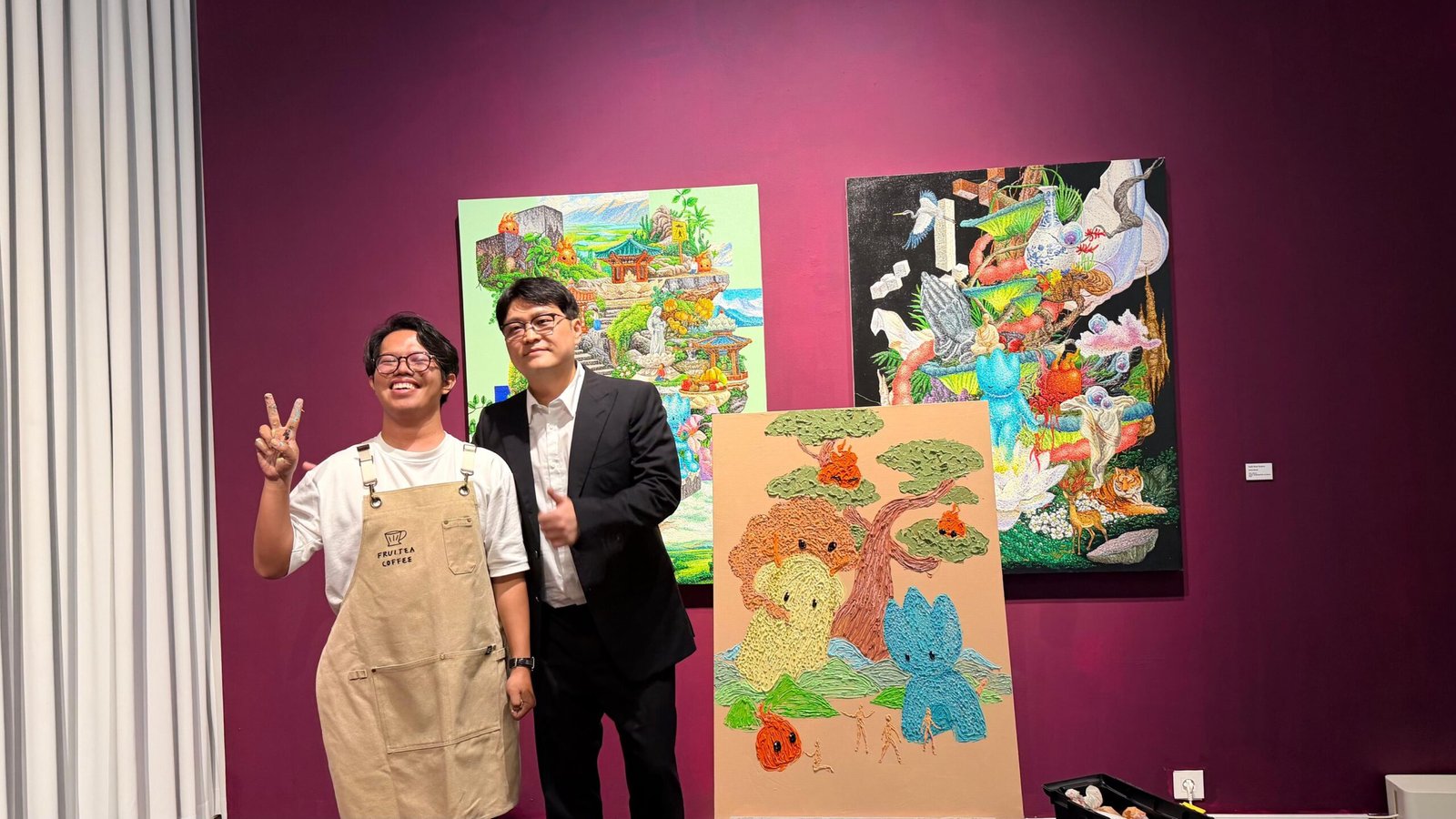
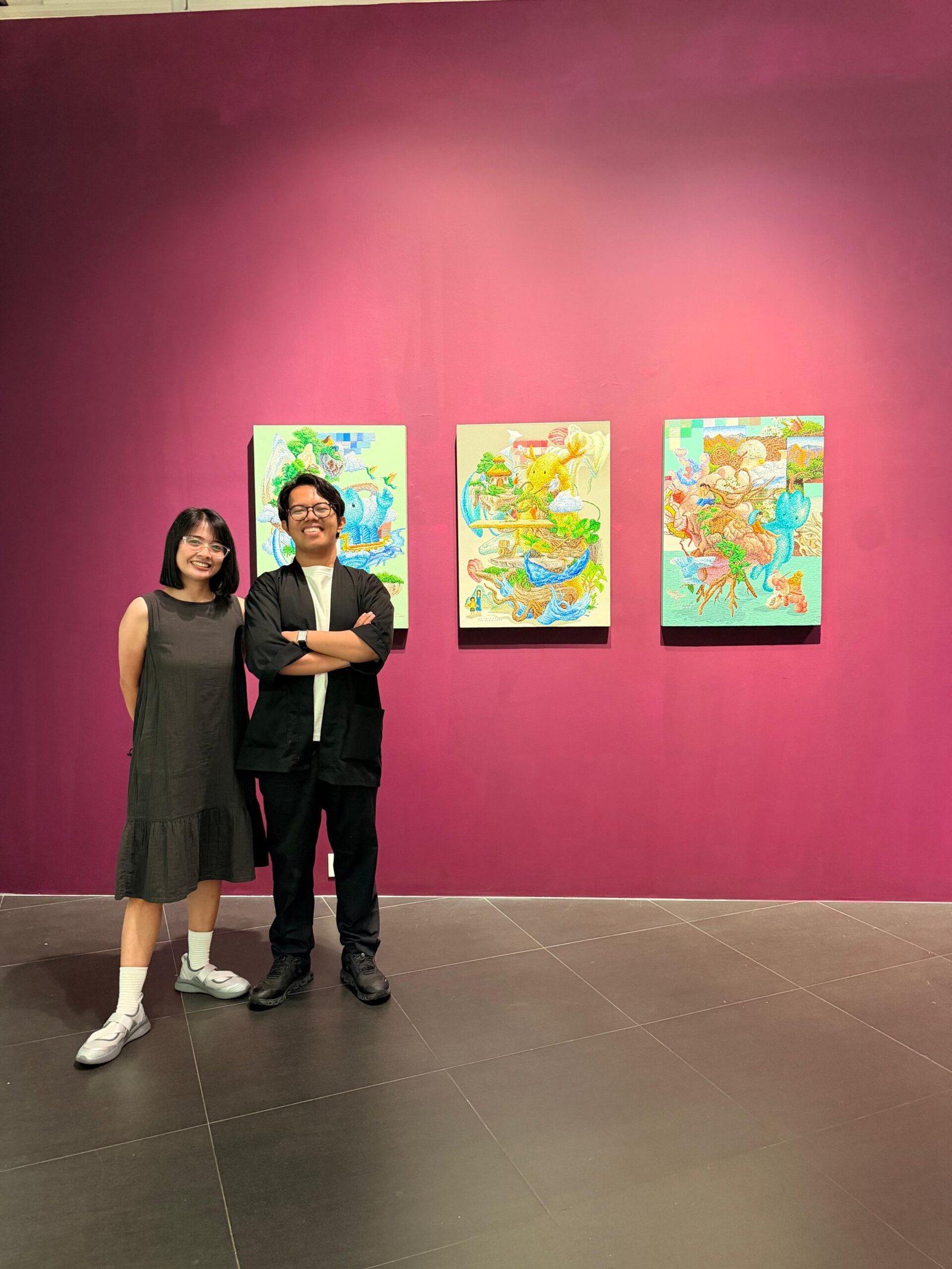
When Wild Grasses Take Over
A solo exhibition by Galih Reza Suseno
July 29 to August 30, 2026
Next Museum
2F, Lotte World Mall, 300 Olympic-ro, Songpa-gu, Seoul, South Korea
Artist Statement
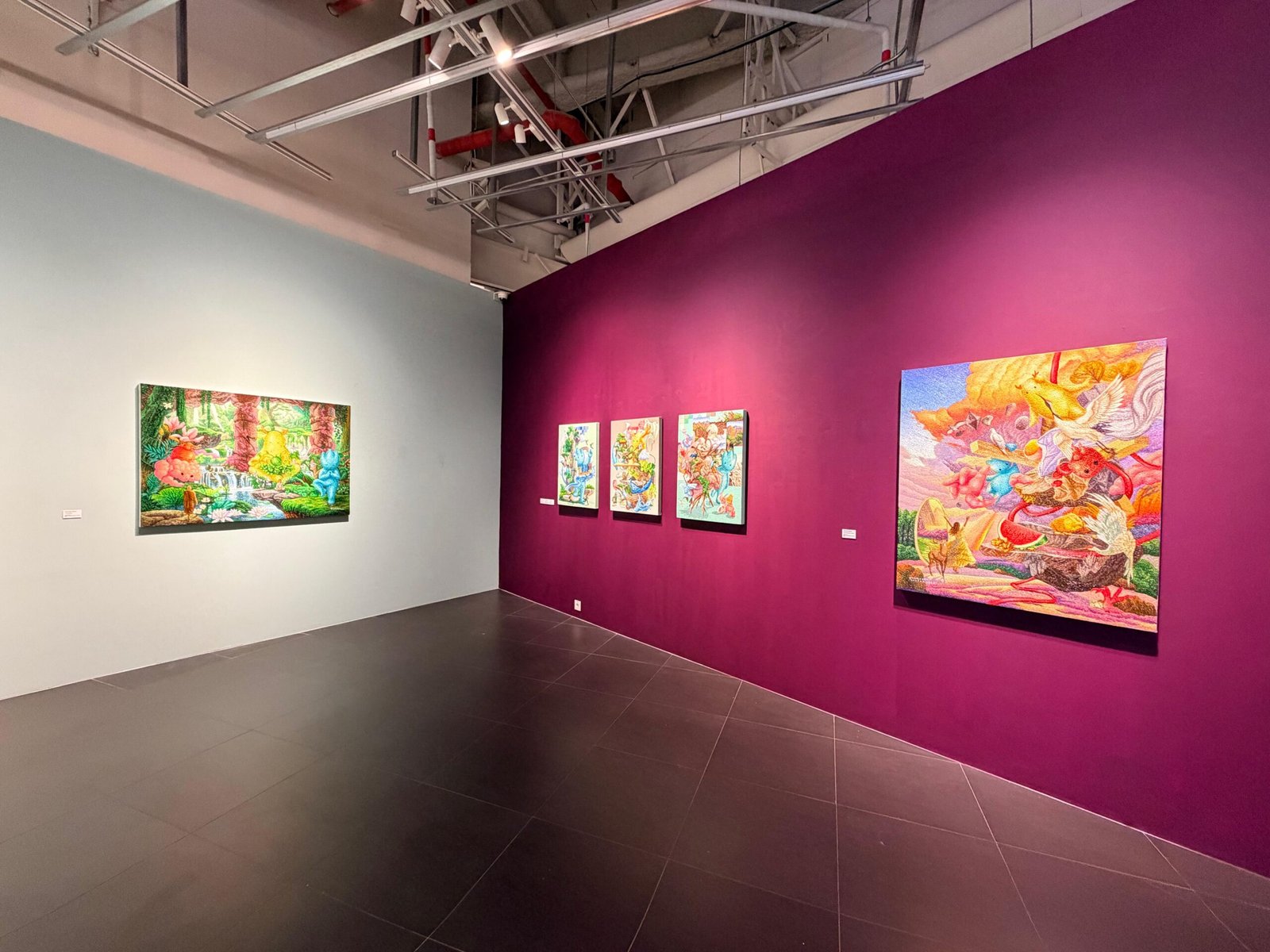
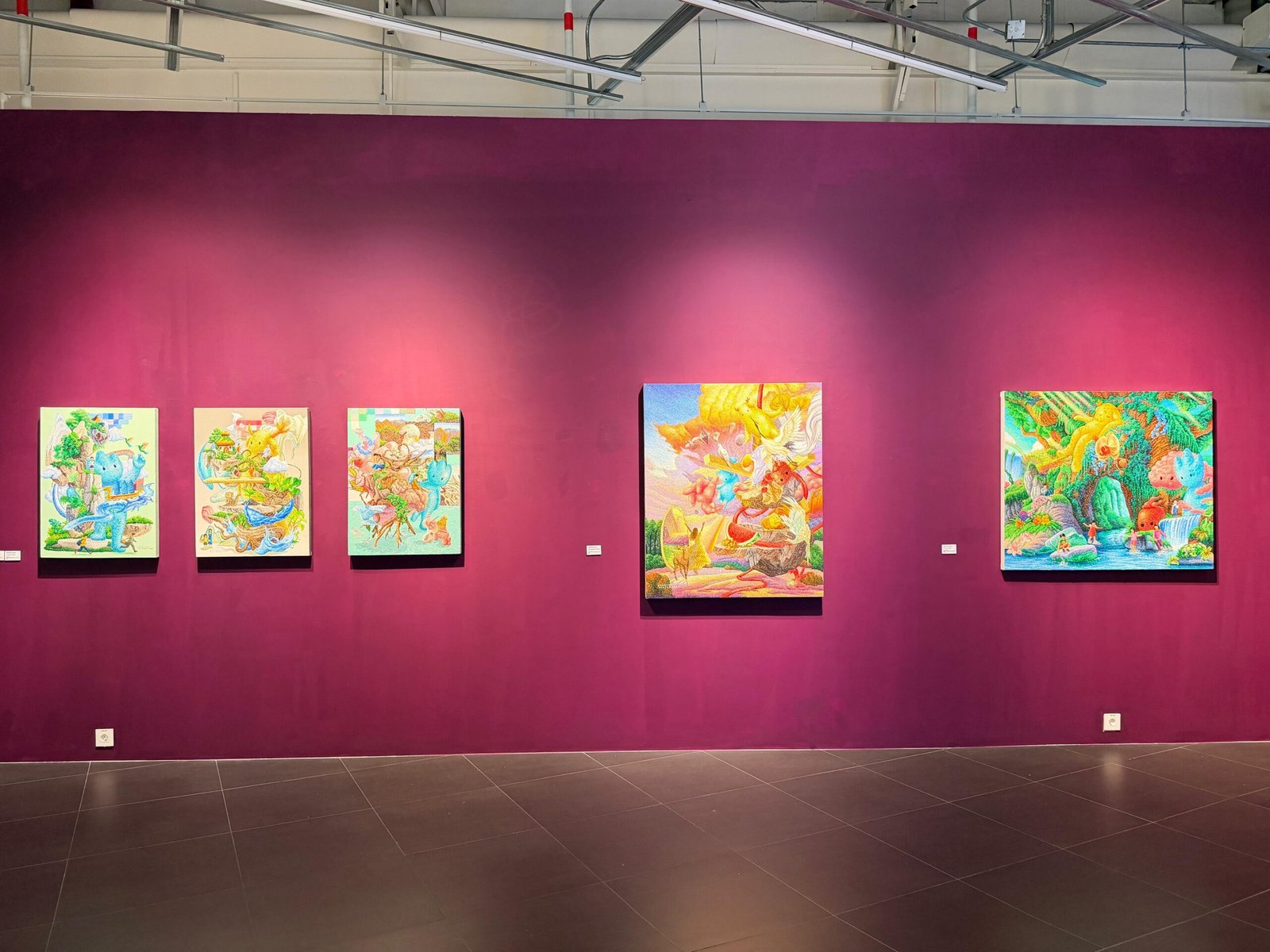
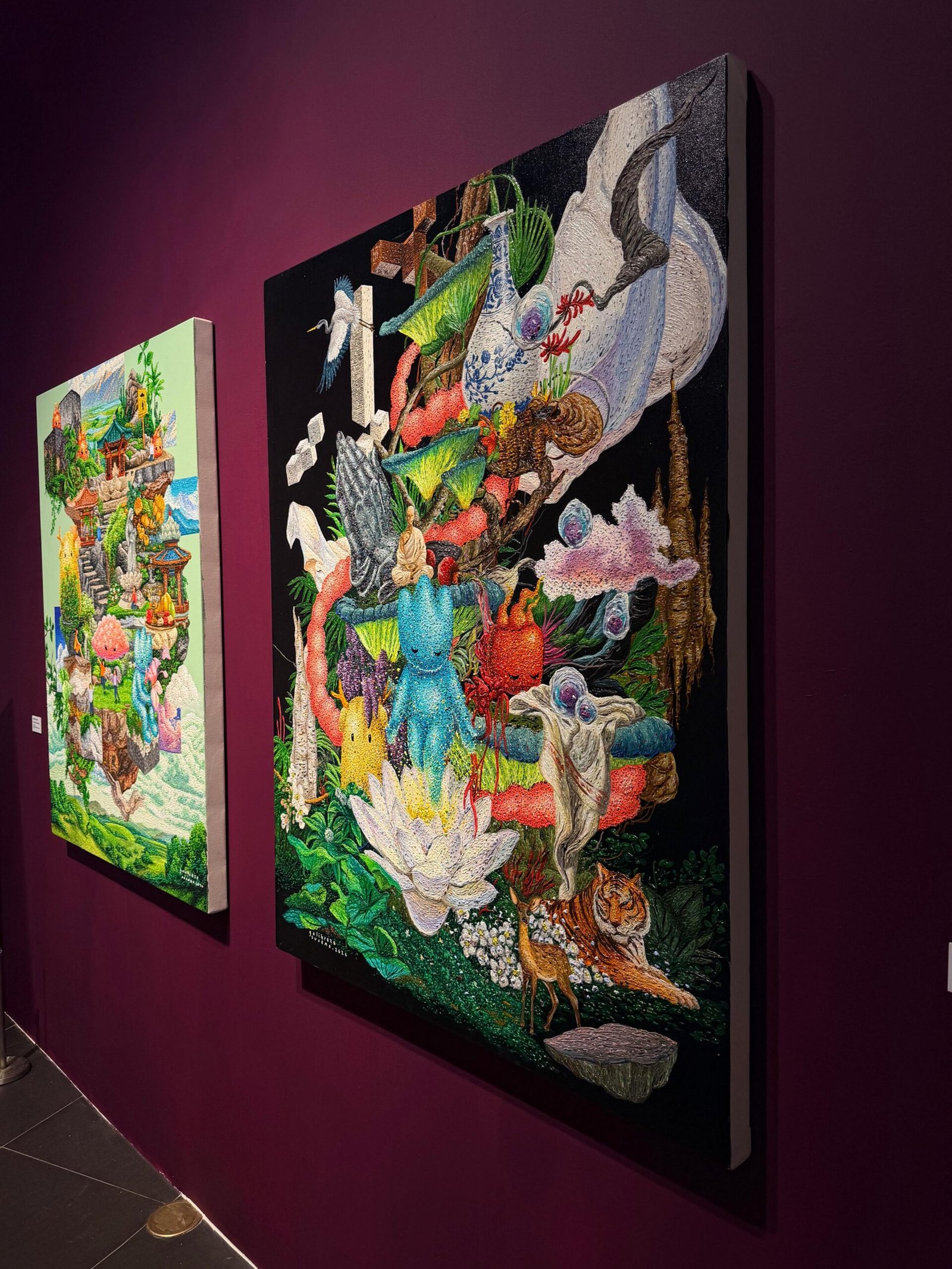
LOCIOUS is a journey born from my deep awareness of nature. From the very beginning, I have been inspired by life in Indonesia. Indonesia is a nation that is not only multicultural but also multi-natural, it means rich in diverse ecosystems stretching from coastlines and oceans to mountains. Through this body of work, I embrace the complexity of nature. It is not merely a background, but a living community of subjects. Human beings are part of nature, not its rulers. Humanity and nature are not separate entities, but an ontological unity that sustains one another. Nature is neither a servant nor the property of civilization; it is a sacred space where the verses of God are revealed through leaves, the scent of soil, and the roar of the sea.
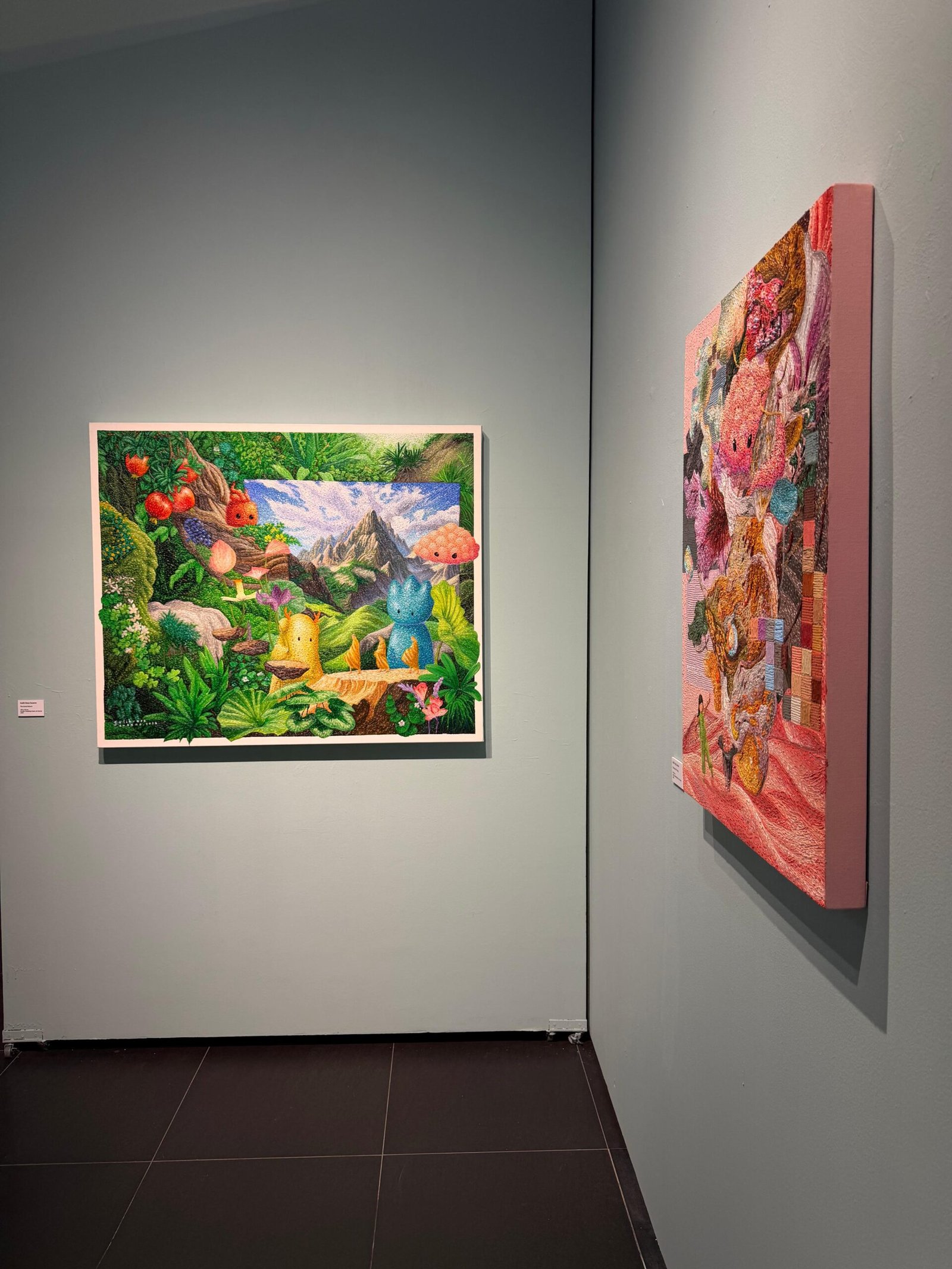
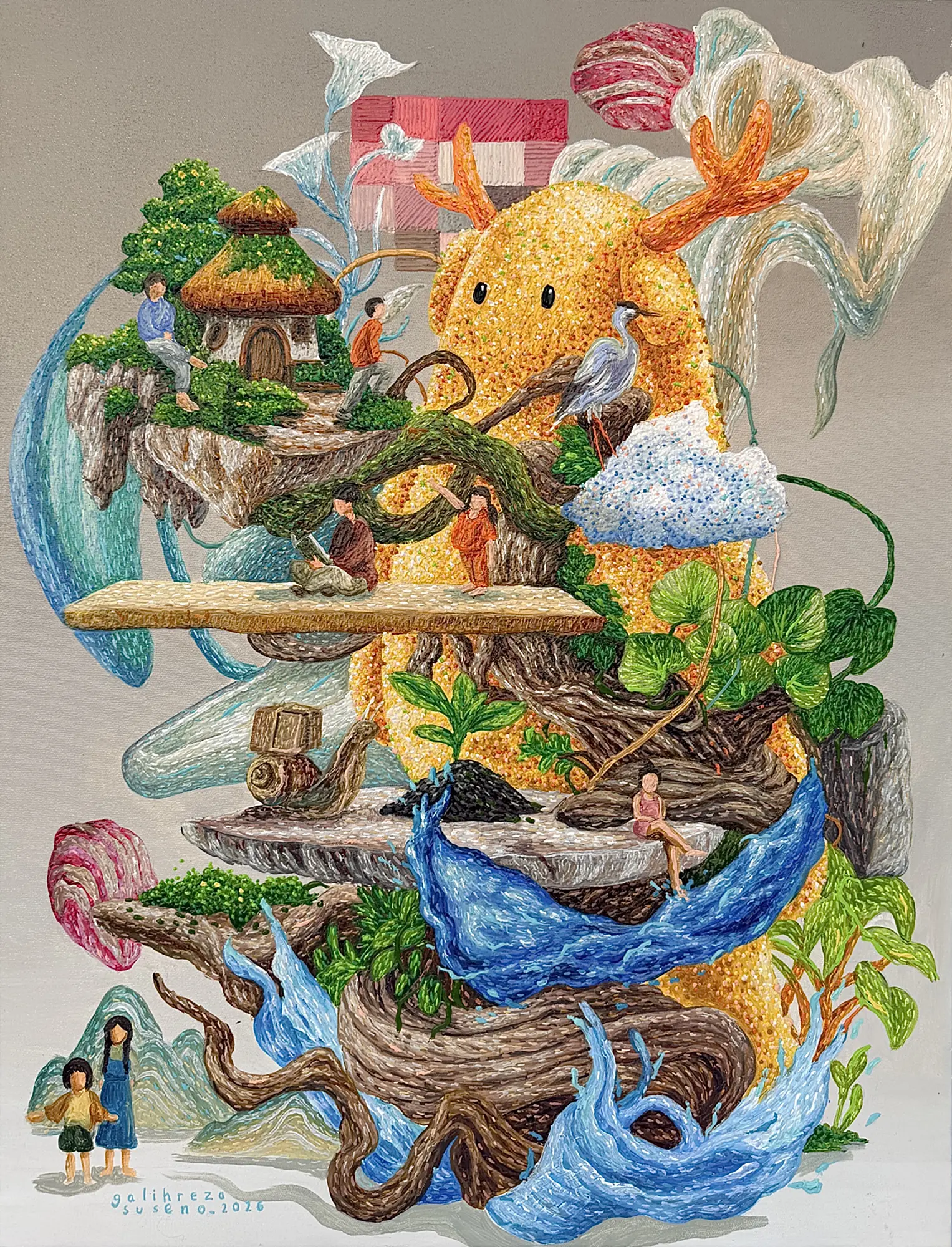
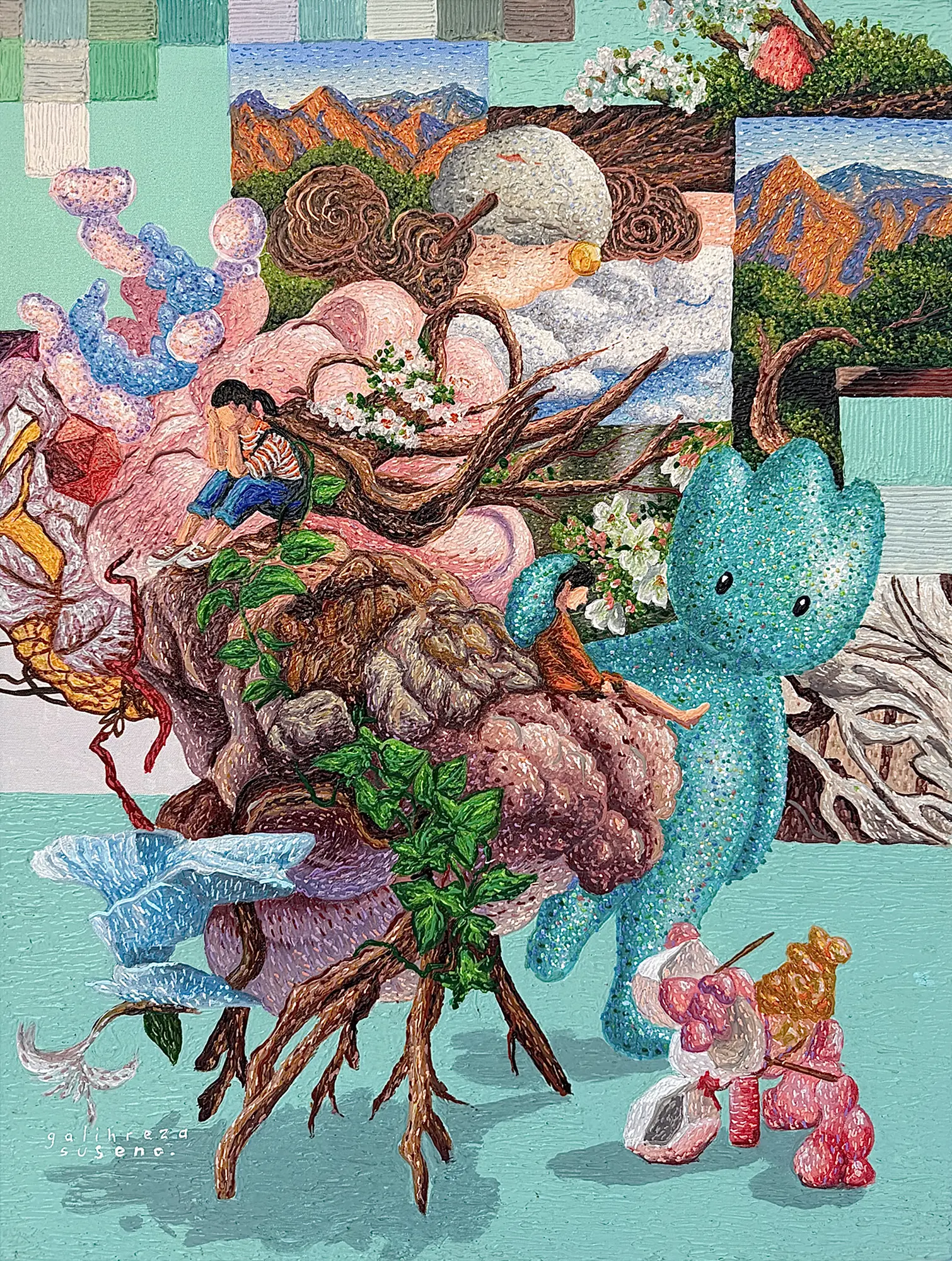
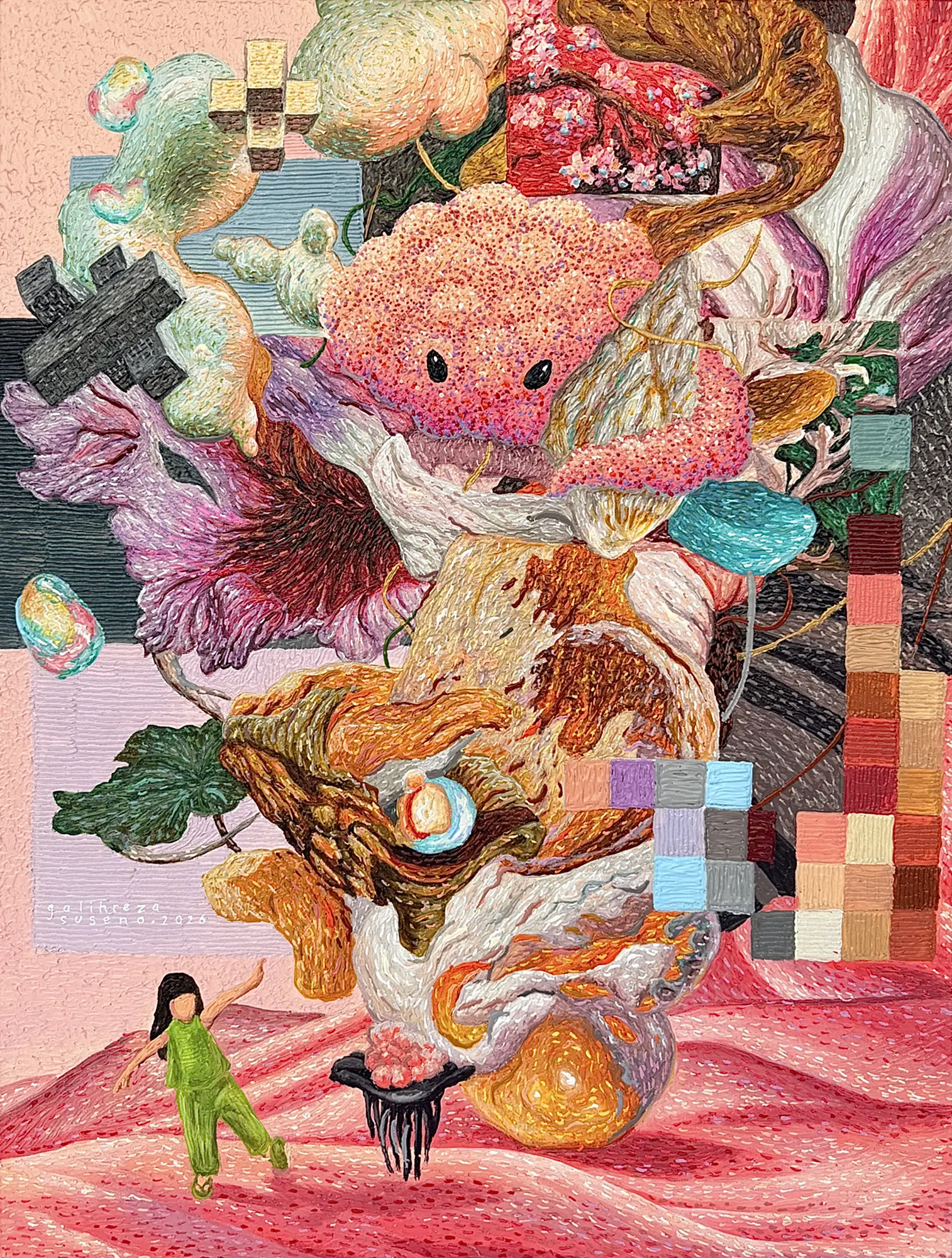
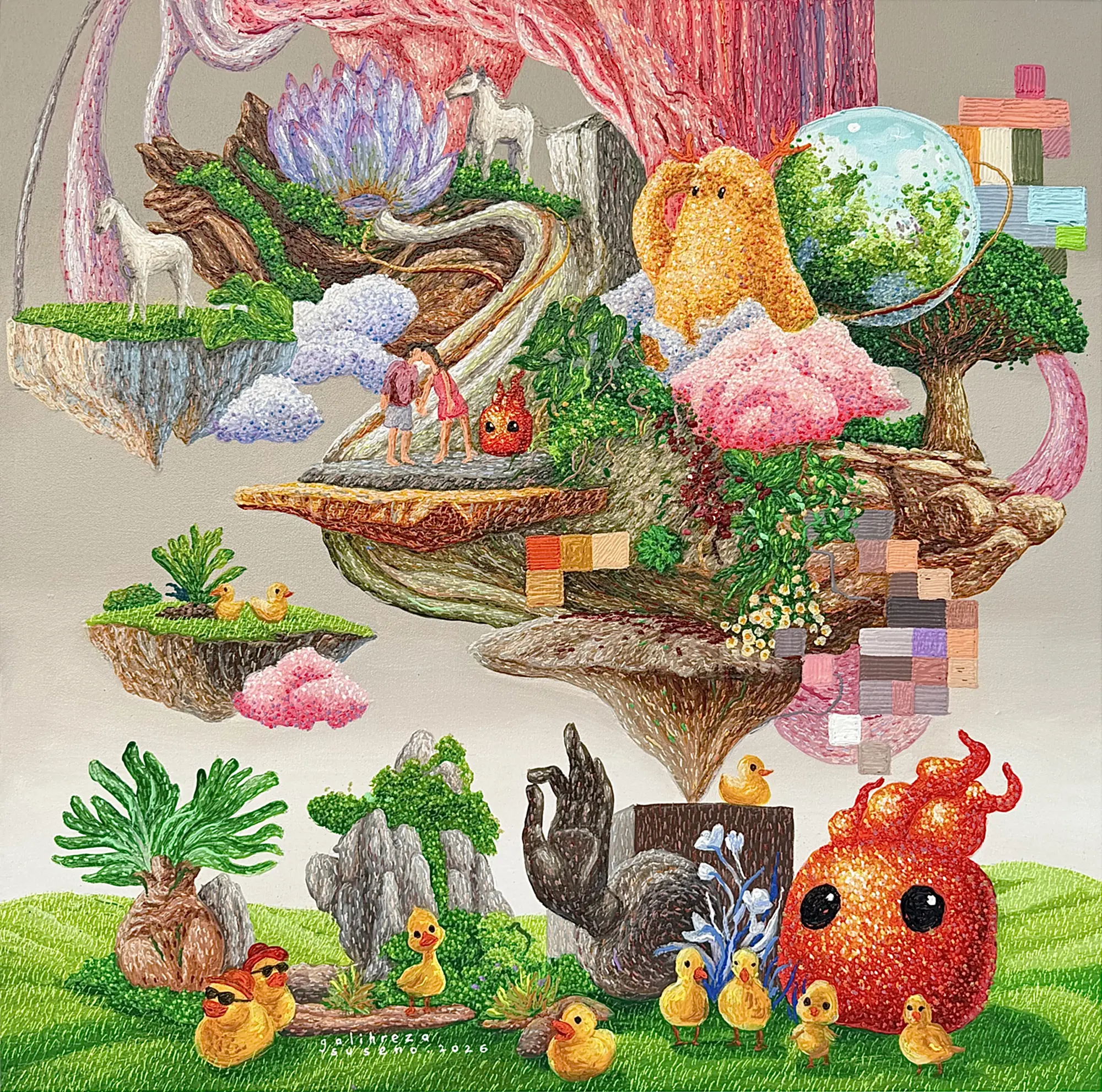
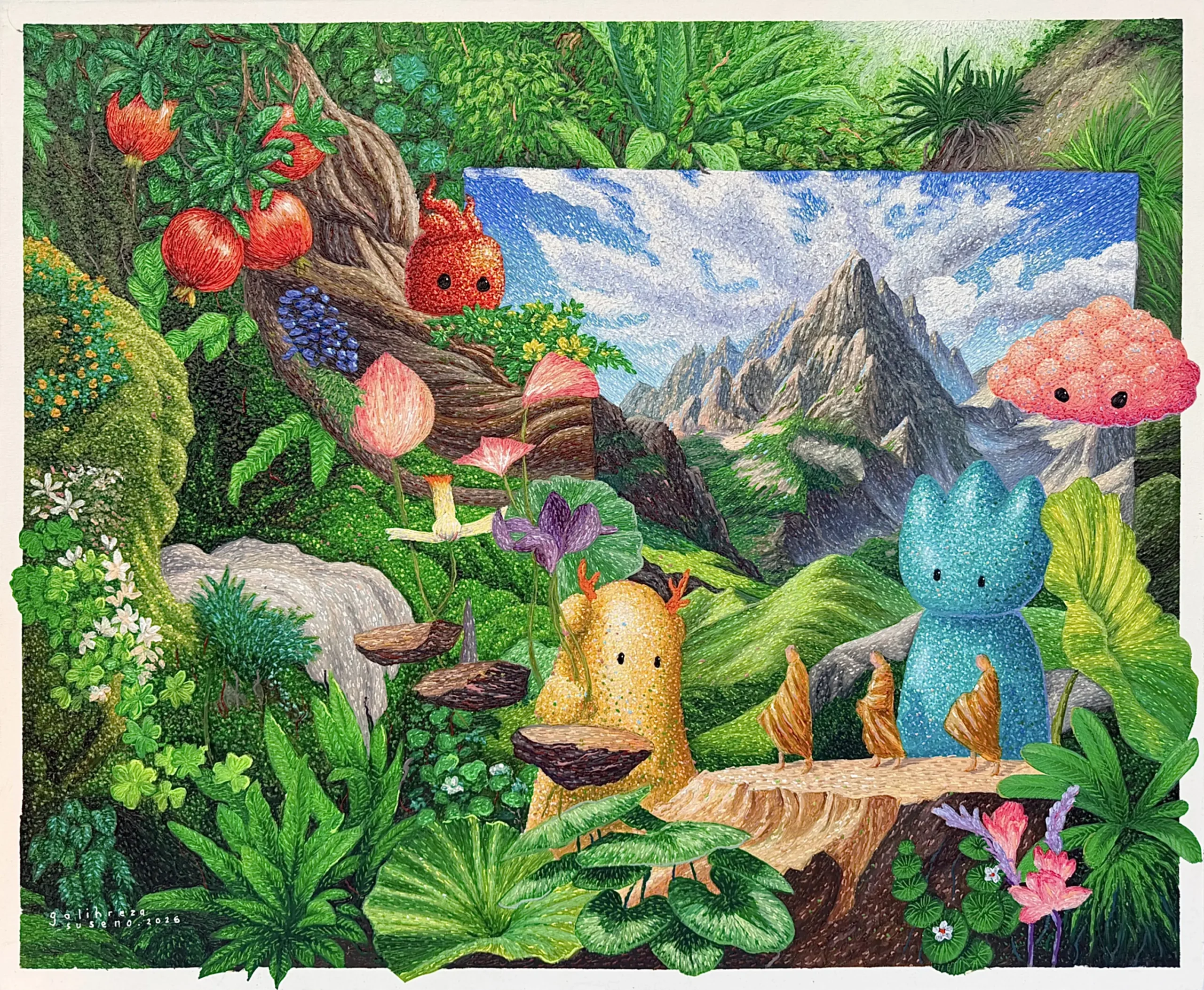
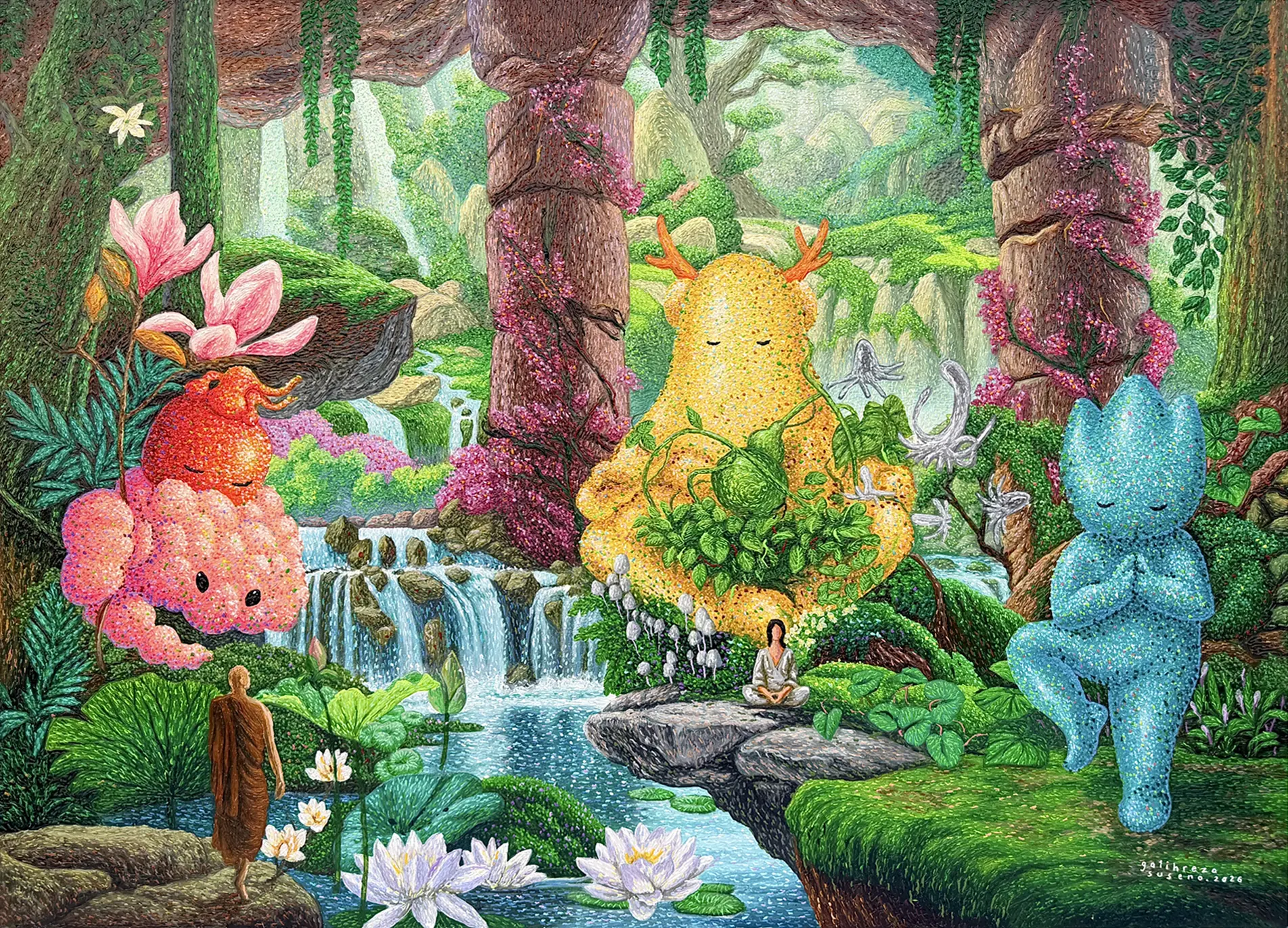
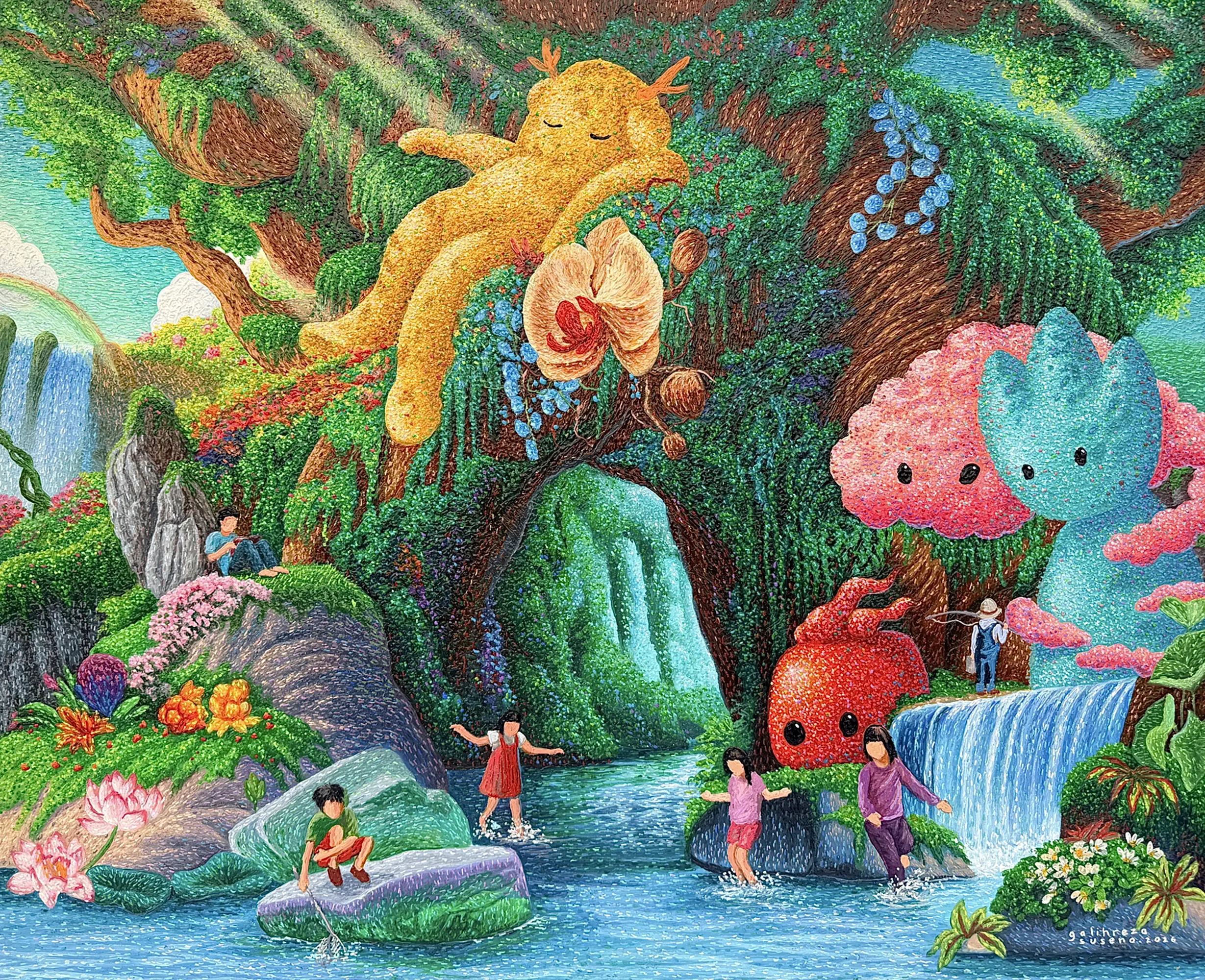
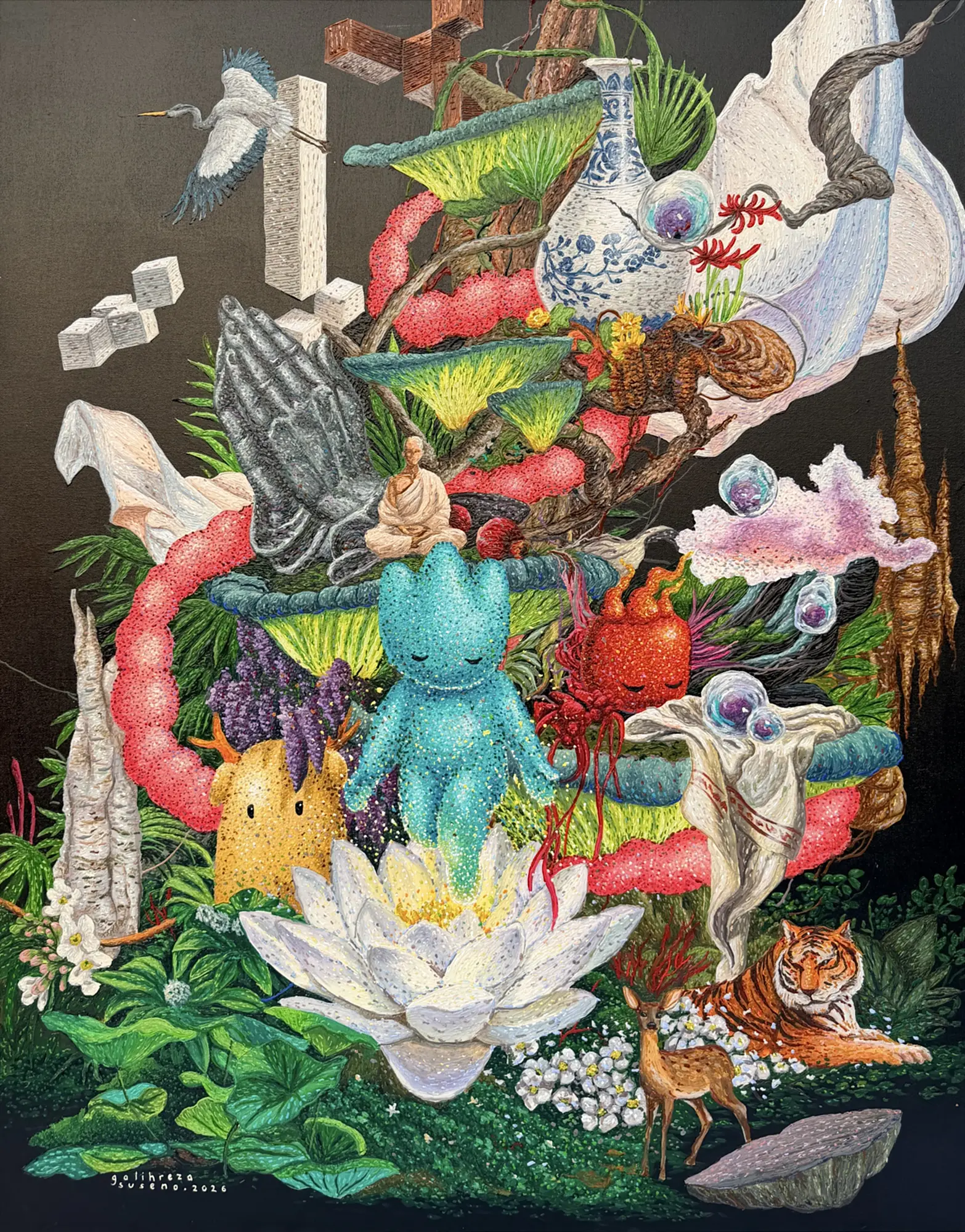
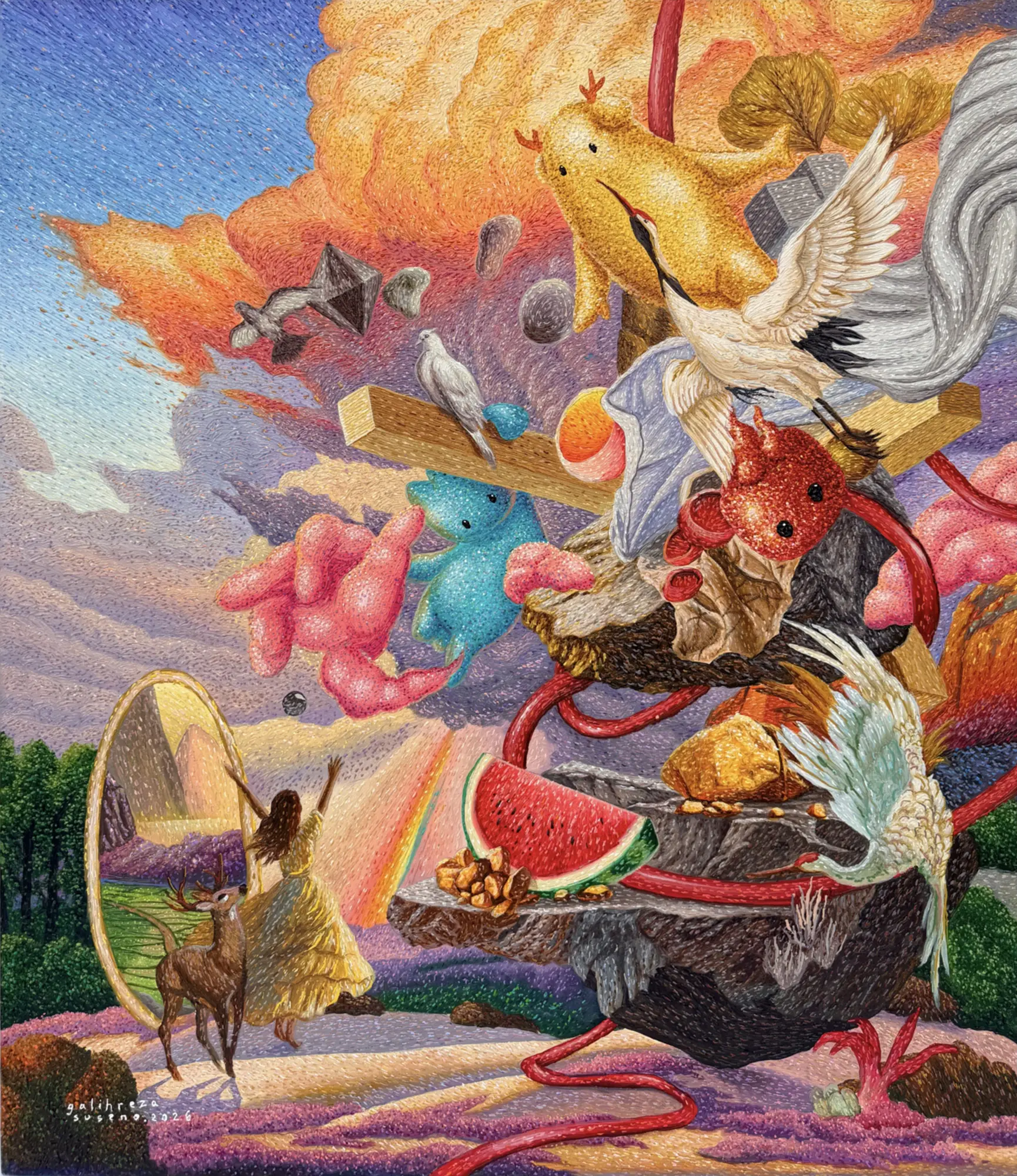
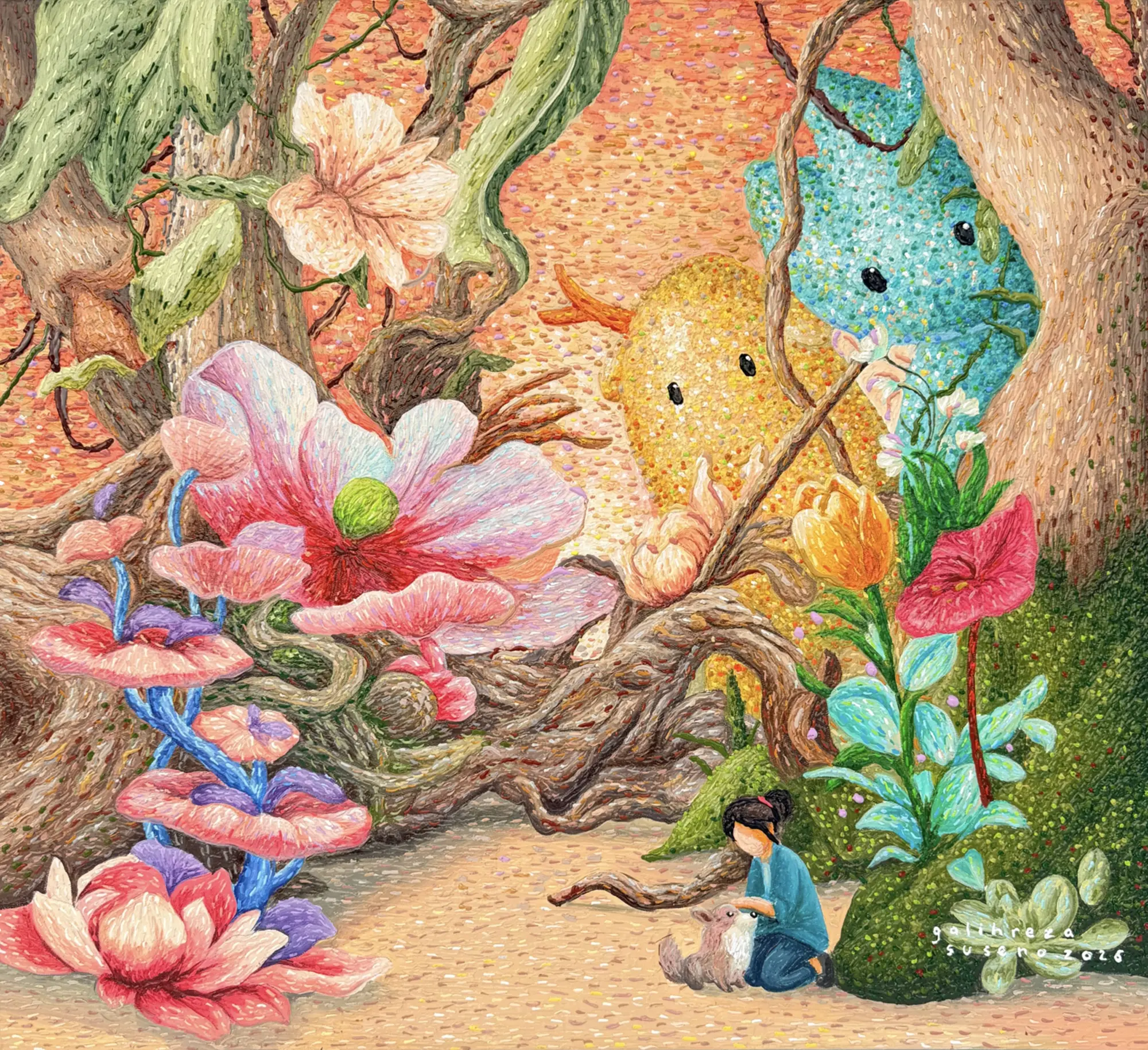
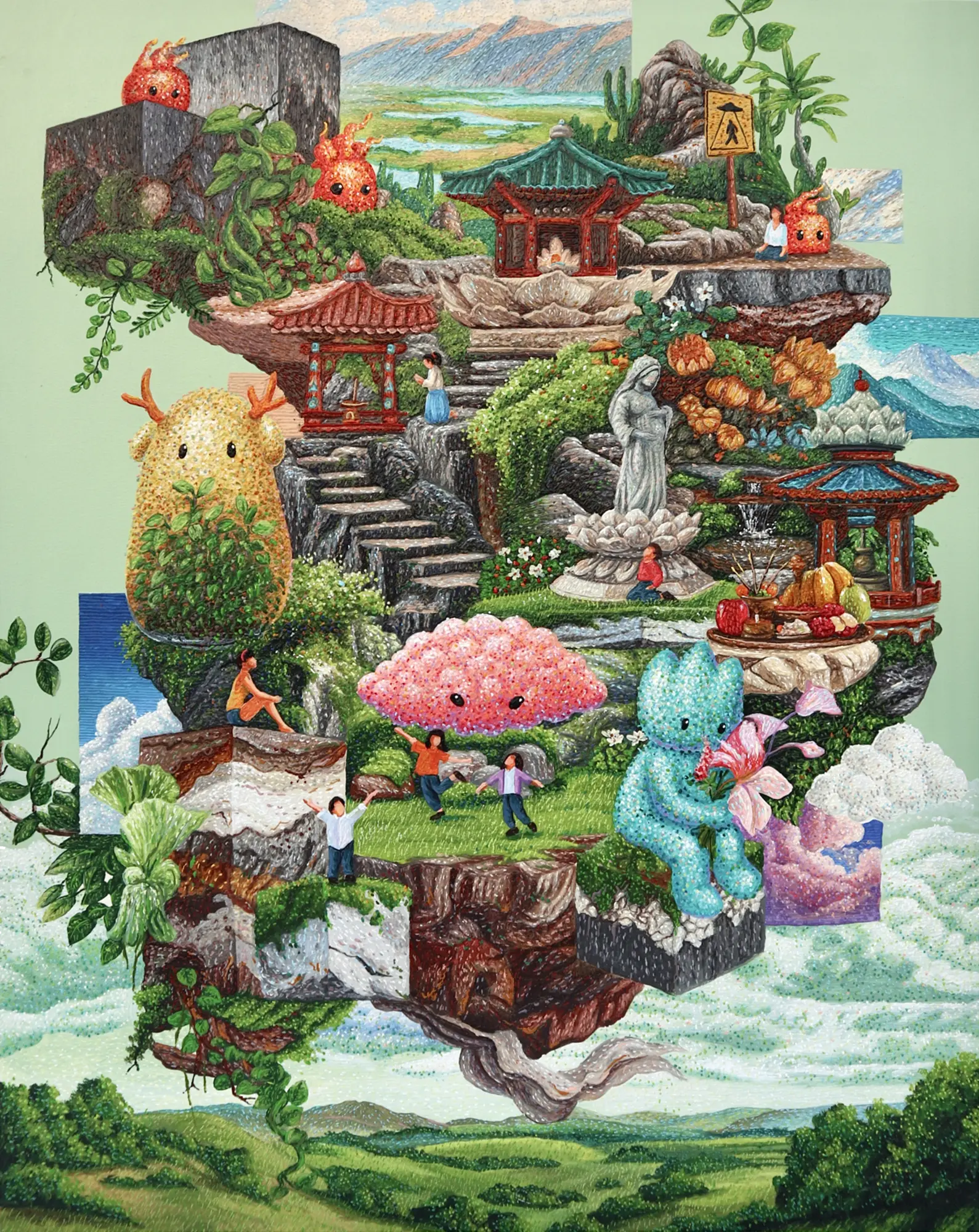
LOCIOUS emerged as the embodiment of the spirits of nature, embracing the four fundamental elements: Water (Ranu, derived from Sanskrit), Earth (Riku, from Japanese), Air (Shu, from Egyptian), and Fire (Shoku, a name inspired by the way I call my dog). They inhabit an imaginary world called Ether, serving as guardians of nature who preserve the harmony between humanity and the natural world. Through them, I seek to create a mythology in which nature is alive, embodied, and transcends the artificial divide between humans and the environment. It is not only human beings who have the right to life on this planet; trees have the right to remain green, birds have the right to sing, and worms have the right to inhabit soil untouched by the concrete that displaces them. This awareness is rooted in a quiet state I call “dendrophile”—a sense of happiness that emerges when we are fully present in nature. Through each painting, I invite viewers not only to love nature romantically, but also to gently resist the systems that continue to exploit and destroy it. As symbolic guardians of nature’s balance, LOCIOUS reminds us of the importance of living in harmony with the environment.
I live on the equator, within the Ring of Fire, where the possibility of disaster is always present. Everything is marked by uncertainty, and it is precisely there, when wild grasses begin to take over, that When Wild Grasses Take Over asks us a question: Are we ready to embrace nature, to care for it as our cosmic kin, and to reaffirm our place within a larger cosmos shaped by uncertainty?
What does it truly mean to live with nature, rather than simply live upon it? This exhibition is my reflection on that question. I imagine a world where the guardians of nature still breathe. Rivers carry memories, the wind has a face, and harmony between humanity and nature is not a dream of the future, but a memory of something we once possessed.
In a world that continues to place humanity at the centre of everything, wild grasses remind us of a simple truth: nature always finds its own way. It grows through cracks, breaks through concrete, and slowly reclaims the spaces we once believed belonged to us alone. This is the moment when we stop resisting nature and choose to step back. Only then can the Earth, which has waited patiently in silence, begin to breathe once again. As Jalaluddin Rumi wrote, the grass beneath our feet today will one day grow above our graves. Through these works, I hope we can reconsider humanity’s place, not as the centre of life, but as one small part of a cycle of nature that is older, greater, and will continue long after we are gone.
ARTWORKS
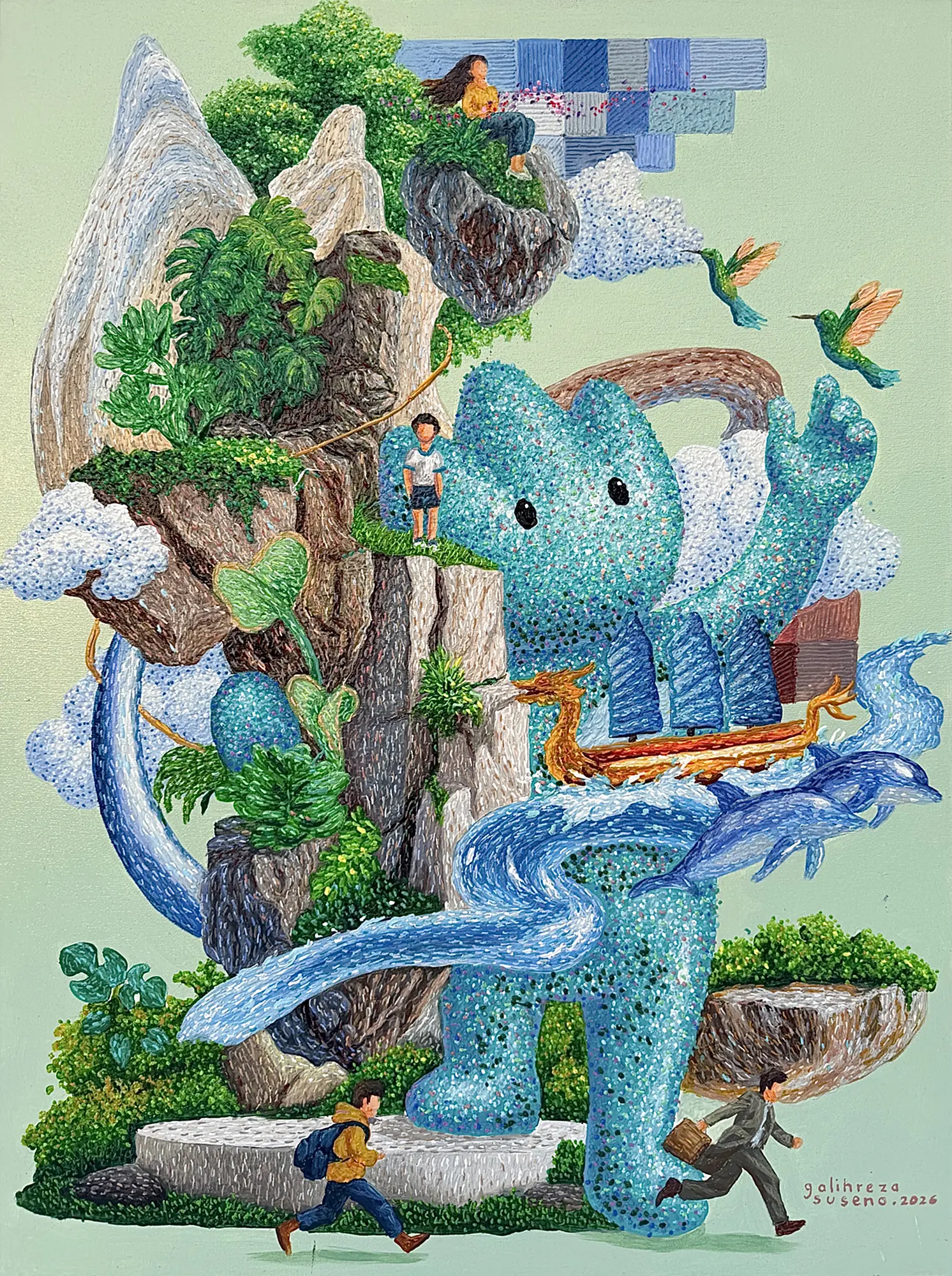
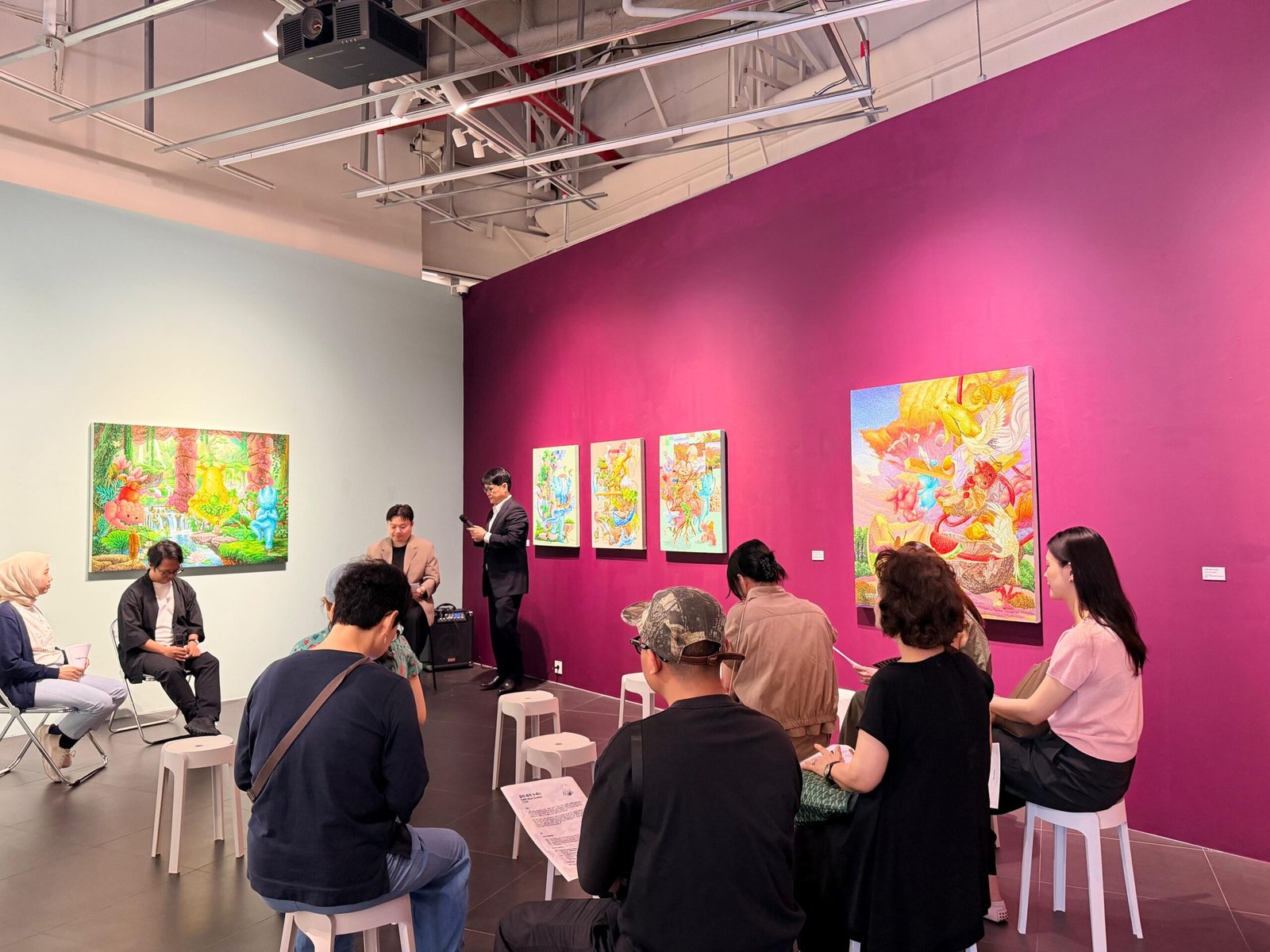
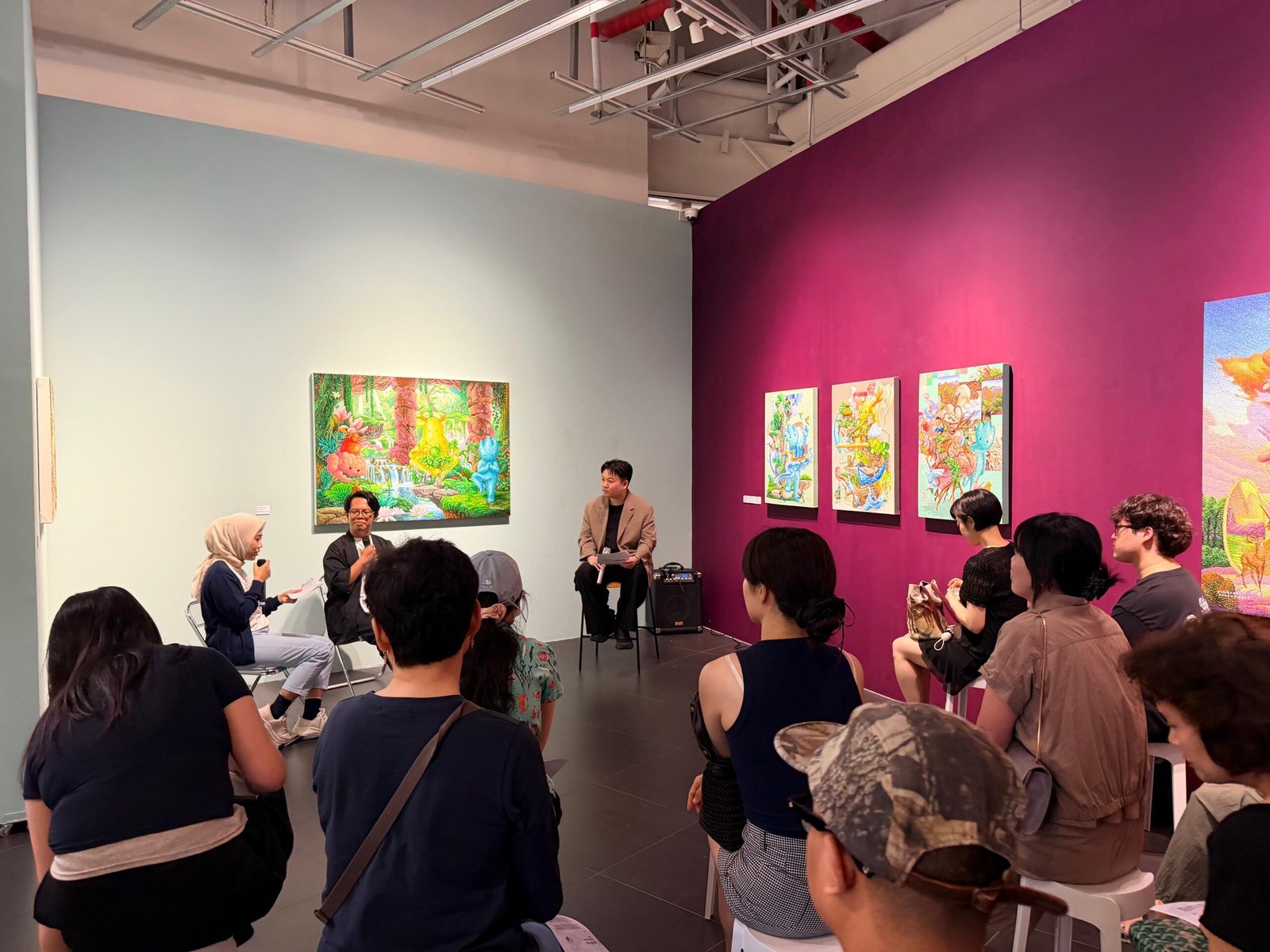
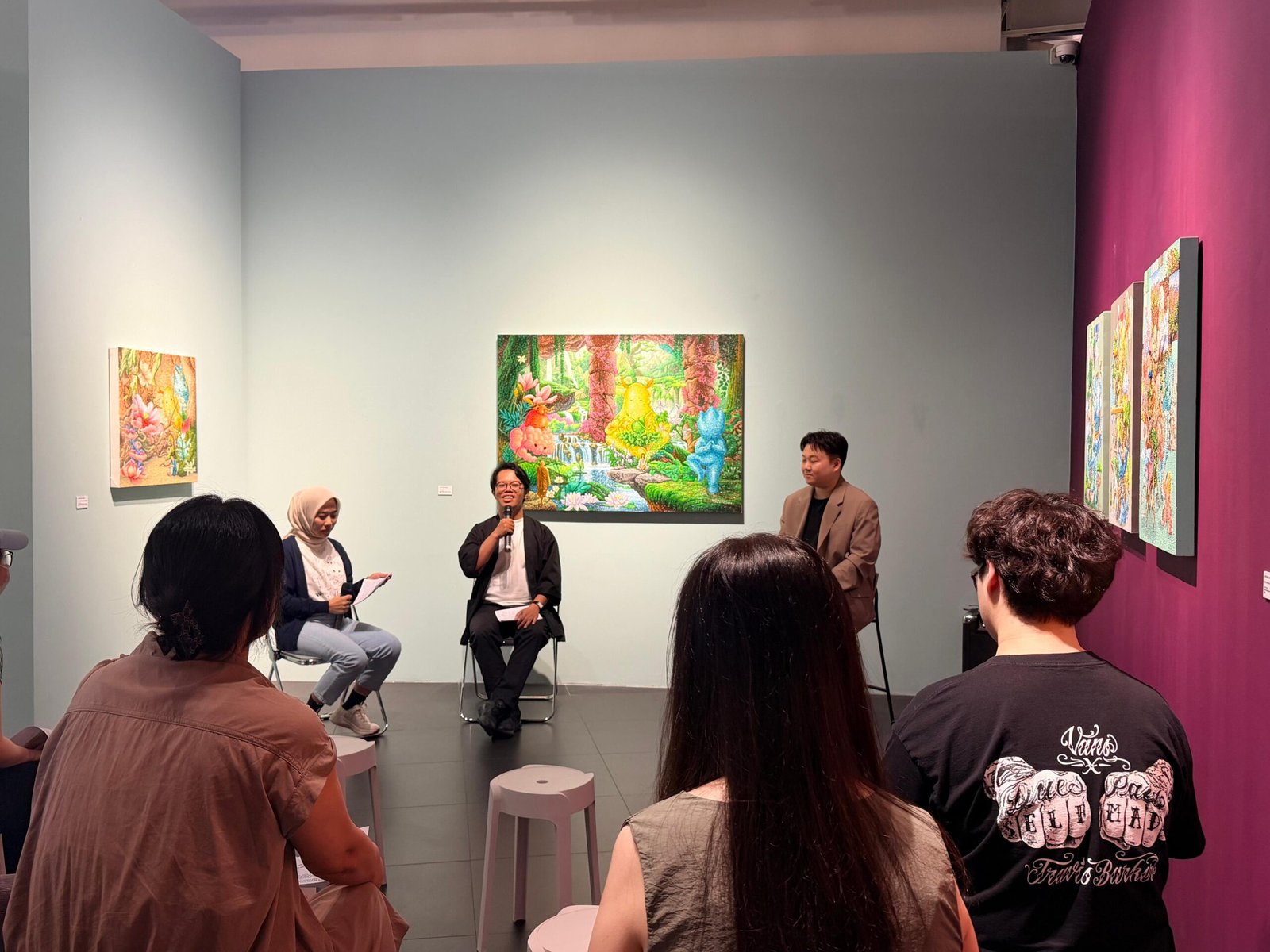
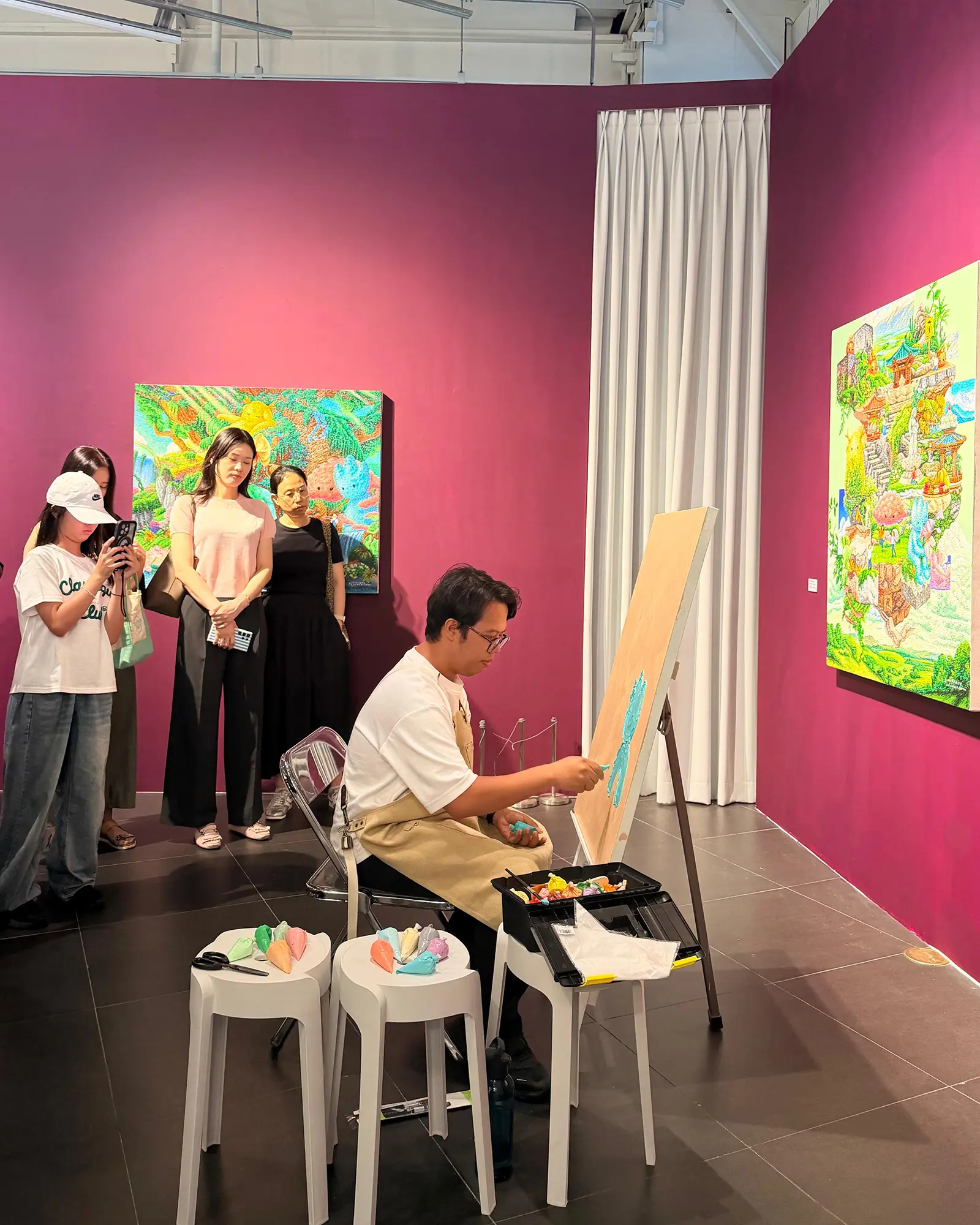
Documentation